
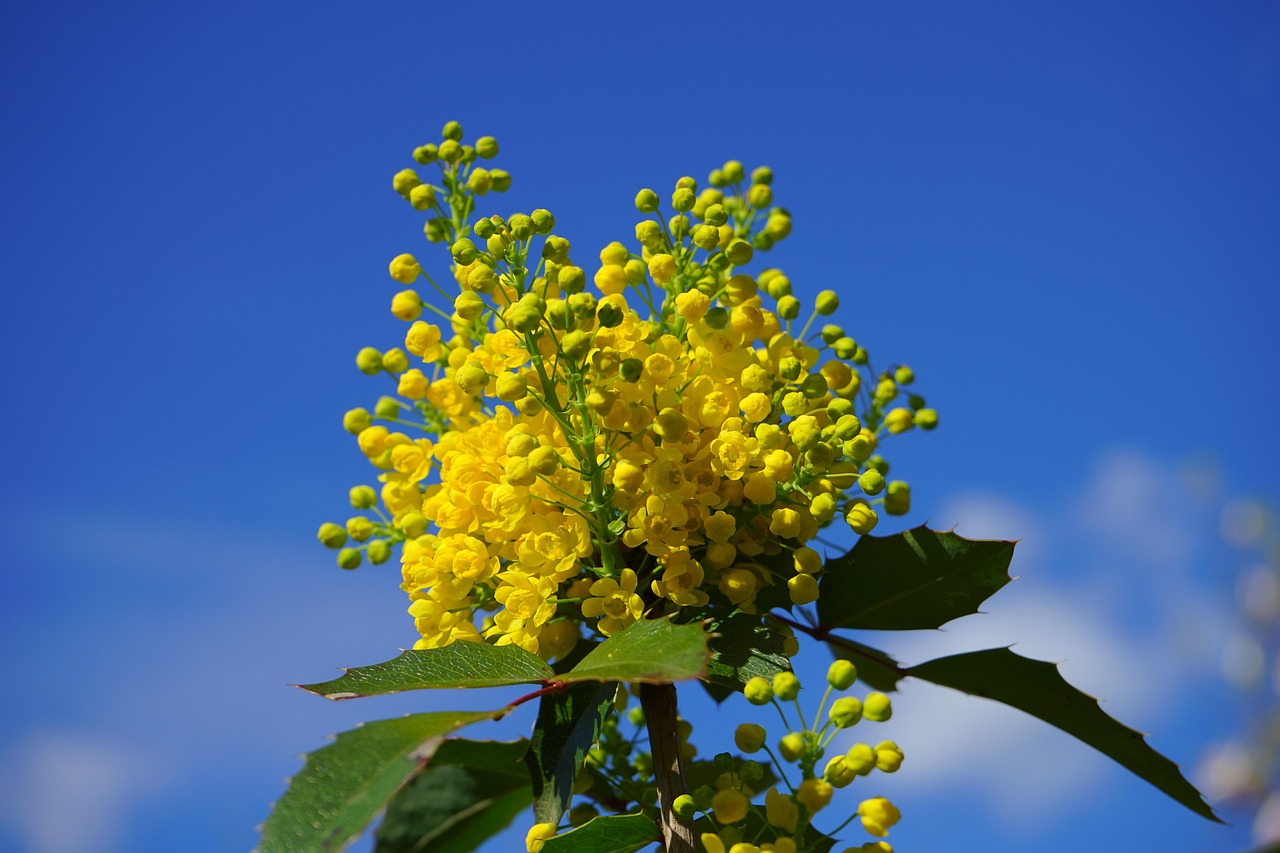
State Flower: Oregon Grape
Updates in 2025:
- HB3141 [LS] Relating to Oregon Farmer and Rancher Day; prescribing an effective date; “third Tuesday of March of each year is designated as Oregon Farmer and Rancher Day”, includes “Whereas Oregon farmers and ranchers remain optimistic, innovative and adaptable in an unpredictable, ever-changing world, using climate-smart agricultural practices to increase sustainability, protect and conserve natural resources and ensure that the soil they toil in will be healthy, fertile and ripe with possibility for the future;” – Governor signed 5/8/2025
- SB547 [LS] Relating to Oregon Native Plant Appreciation Month; declaring an emergency; “month of April of each year is designated as Oregon Native Plant Appreciation Month”, includes “Whereas many of Oregon’s native plants improve soil health by increasing the diversity of soil microbes and helping the soil absorb and store water through their deep root systems” – Governor signed 6/20/2025
Updates in 2024:
None
Updates in 2023:
- HB2998 [LS] Relating to soil health; prescribing an effective date; Creates Oregon Soil Health Initiative – in committee upon adjournment
- HB3409 [LS] Relating to climate; and declaring an emergency; includes “that it is the policy of this state to: … (3) Incentivize and implement natural climate solutions by: … (d) Ensuring that a diversity of landowners and managers are able to voluntarily participate in incentive-based programs for natural climate solutions and climate resilience through activities that may include, but are not limited to: … (F) Optimizing the social, health, ecological, climate resilience and economic benefits of natural climate solutions, including: … (iv) Improving soil health and productivity;” and $10,000,000 appropriated to Natural and Working Lands Fund to implement natural climate solutions – signed and enacted 7/27/2023
- HB3490/SB530 [LS/LS] Relating to natural climate solutions; prescribing an effective date; Establishes state policy regarding natural climate solutions; includes “competitive grant program for equipment to support soil health practices” – in committee upon adjournment
- SB526 [LS] Relating to support for agricultural producers who employ agricultural practices that lead to resilient farms; whereas clauses include information on organic farmers leading on soil health practices and importance of organic sales in Oregon, bill includes support for farmers who implement soil health practices, by reimbursing for soil testing and certification – in committee upon adjournment
Updates in 2022:
- SB1501 [LS] Relating to a negotiated agreement concerning private forestland; (not soil health bill – ecosystem health/services) – passed 3/8/2022, signed 3/24/2022
- SB1534 [LS] Carbon Sequestration in Working Lands and Waters; (relating to biological carbon sequestration, not soil health bill) – stalled in committee
- SB1546 [LS] Relating to Elliott State Research; (not soil health bill – ecosystem health/services) – passed 3/8/2022, signed 3/24/2022
Updates in 2021:
- HB2269/SB404 [LS/LS] Relating to organic food production; includes soil health in program area – stalled in committee
Pre-2021
- HB2020 [LS] (2019) Relating to greenhouse gas emissions; declaring an emergency; sets up cap-and-invest, allowing funding of agricultural practices that serve to reduce emissions, promote carbon sequestration, healthy soil practices, irrigation efficiency projects, and methane emissions reduction or recovery projects – in committee upon adjournment
Legislative Information
Date:
June 2021
Legislation:
SB 5502 Budget Bill for Oregon Department of Agriculture
see page 22 of LFO Recommendations for Package 365
Sponsors:
N/A for agency budget bills
Agencies Involved:
Oregon Department of Agriculture
Rule Making Processes:
N/A
Program Summary
Description:
This new Soil Health Specialist Position at Oregon Department of Agriculture (ODA) will provide in-house expertise at ODA to improve soil health on Oregon’s agricultural lands. More specifically:
- Support implementation of ODA’s climate change plan which was drafted in response to the Governor’s Climate Action Plan (EO 20-04);
- Advance Oregon agricultural practices that promote soil health through education, technical assistance and coordination;
- Pursue funding from agency partners to support more widespread adoption of soil health practices;
- Recommend additional policies and programs in Oregon to support soil health, using other state policies as models; and
- Collaborate on research to understand Oregon’s soil carbon sequestration rates and how various practices can promote carbon sequestration and climate resilience.
Soil Health Definitions:
Soil health has been defined as the “the continued capacity of soil to function as a vital living system, within ecosystem and land-use boundaries, to sustain biological productivity, promote the quality of air and water environments, and maintain plant, animal, and human health”.
Stated Goals:
Provide in-house expertise at ODA to improve soil health on Oregon’s agricultural lands.
Program Required Measurements:
TBD
Tools & Guidance:
N/A
Funding Sources
Founding Source/s:
Oregon USDA Natural Resources Conservation Service
Funding Type/s:
Federal Farm Bill monies
Practices Eligible for Funding:
TBD
Lessons Learned
N/A
Legislative Information
Date:
Introduced February 4, 2019
Passed the House June 17, 2019
Died in the Senate July 8, 2019
Legislation:
Sponsors:
The Joint Committee On Carbon Reduction
Agencies Involved:
Oregon Department of Agriculture
Rule Making Processes:
A state agency, most likely the Carbon Policy Office, will oversee and facilitate the rulemaking process.
The Joint Committee on Carbon Reduction (legislators) will be involved in the rulemaking process for investments. They will need to approve the uses of the Climate Investments Fund.
Program Summary
Description:
The Bill was conceived as a way to take action to address the climate crisis by reducing Oregon’s greenhouse gas emissions. The Bill would declare a climate emergency and create a statewide cap-and-invest program. If the cap-and-invest program were to be enacted, Oregon would join California as a part of the Western Climate Initiative.
HB 2020 proposes an 80% reduction in emissions compared to 1990 levels by the year 2050. The revenue generated from auctioning emissions allowances would go to several grant programs, including a Climate Investments Fund, which would fund projects, programs and activities that reduce and sequester greenhouse gas emissions and promote adaptation and resilience in the face of climate change. Investments may include (but are not limited to): investments in agricultural practices that serve to reduce greenhouse gas emissions or promote carbon sequestration, healthy soil practices, irrigation efficiency projects, and methane emissions reduction or recovery projects. At least 20% of the Climate Investments Fund is designated to natural and working lands.
Soil Health Definitions:
As defined by the NRCS, “… the continued capacity of soil to function as a vital living ecosystem that sustains plants, animals, and humans.”
Stated Goals:
To reduce on-farm greenhouse gas emissions while supporting carbon sequestration
Program Required Measurements:
N/A
Tools & Guidance:
N/A
Funding Sources
Founding Source/s:
N/A
Funding Type/s:
N/A
Practices Eligible for Funding:
N/A
Lessons Learned
There was significant opposition from Republican legislators based on the climate change nature of the bill and citing concern about the economic impact on rural communities.
Oregon Farm Bureau, though supportive of soil health overall, did not support the Cap-and-Invest Program.
Agencies Involved
House Committee: Agriculture and Natural Resources
Senate Committee: Natural Resources and Wildfire
State Universities & Researchers
Oregon State University, Central Analytical Laboratory; Soil Health Initiative (land-grant university)
Agricultural Organizations & Technical Assistance
Oregon National Resources Conservation Service
Oregon State University Extension
Soil and Water Conservation Districts
Education & Advocacy Groups
Media & Additional Resources
Questions?
Contact Megan Kemple, Oregon Climate and Agriculture Network at Oregon@healthysoilspolicy.org
Page Last Updated: 03/25/2026